


Welcome to the era where your next binge isn't chosen by you—it's calculated for you.
Myth: Streaming Services Just Track Your Watch History → Truth: They're Monitoring Hundreds of Micro-Behaviors You Don't Even Notice
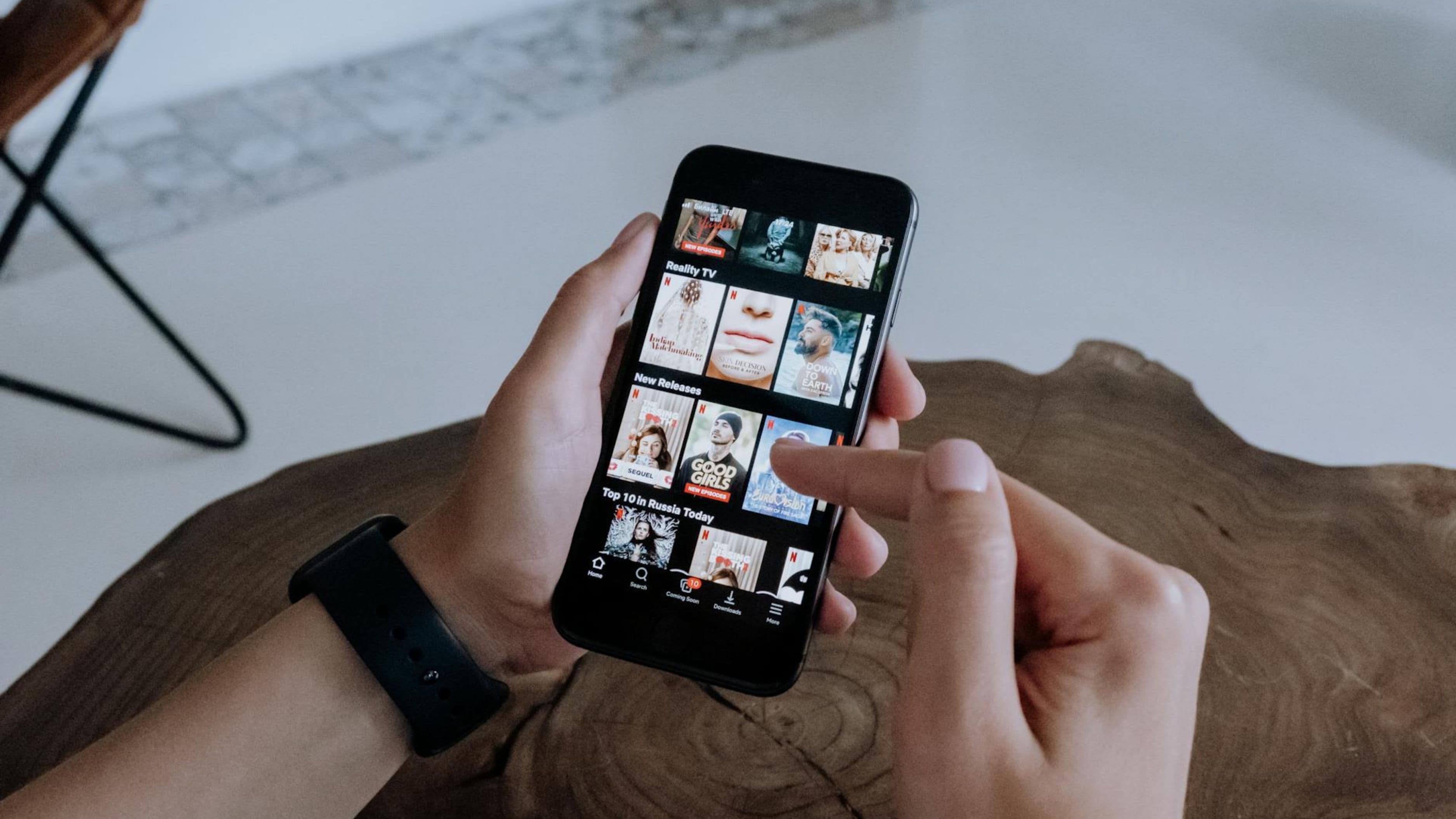
When you think about Netflix or Hulu's recommendations, you probably imagine they're looking at the shows you've finished and finding similar content. But the reality involves a surveillance system so detailed it would make your phone's step counter jealous. These platforms track when you pause, rewind, or abandon a show. They monitor whether you watch the opening credits or skip them. They note if you binge three episodes at 2 a.m. or spread them across a week. They even analyze the exact moment you hover over a thumbnail without clicking.
Netflix alone processes over 250 million data points daily from its global user base. Every interaction feeds machine learning models that don't just categorize what you like—they build psychological profiles predicting what will keep you glued to the screen. The algorithm doesn't care about quality or critical acclaim; it cares about completion rates, session duration, and whether you'll stay subscribed next month. That "Because you watched" list? It's the visible tip of an invisible iceberg of behavioral prediction.
The most unsettling part is how these systems identify patterns you haven't consciously formed yet. They spot the subtle shift in your viewing habits before a major life change, detect your emerging interest in true crime before you realize you're developing one, and serve up content that matches moods you didn't know you were broadcasting through your viewing rhythm.
Myth: Recommendations Are About Finding You Better Content → Truth: They're Designed to Maximize Your Time on Platform
Here's where the mission gets murky. Streaming services will tell you their AI exists to enhance your experience, to cut through the endless catalog and deliver entertainment gold. But engineers and former employees have been increasingly candid: the primary goal isn't your satisfaction—it's your retention. The algorithm succeeds when you watch more, not when you watch better.
This explains why you'll frequently get recommended mediocre content that somehow keeps you watching episode after episode, while brilliant limited series get buried in your queue. The AI has learned that certain types of content—often lighter, more formulaic shows—generate longer viewing sessions and higher completion rates. A prestige drama might earn critical praise, but if viewers drop off after two episodes, the algorithm deprioritizes it in favor of reality TV that people mindlessly consume for hours.
Disney+ and Amazon Prime Video use similar tactics, but with different angles. Disney leans heavily on nostalgia triggers, using AI to identify which childhood memories will pull you into a marathon. Amazon's system integrates shopping behavior with viewing habits, creating a unified profile that predicts not just what you'll watch, but what you might buy afterward. The line between entertainment recommendation and consumer manipulation becomes increasingly blurred when the same AI powering your watchlist also suggests products based on the shows you're streaming.
The uncomfortable truth is that these platforms have aligned their AI objectives with subscription metrics, not viewer fulfillment. You might finish a series feeling empty or wondering why you just spent six hours on something forgettable—and that's not a bug in the system. It's working exactly as designed.
Myth: AI Recommendations Help You Discover New Things → Truth: They're Actually Creating Filter Bubbles That Narrow Your Taste
The promise of algorithmic recommendation was supposed to be discovery—exposure to content you'd never find on your own, breaking you out of your comfort zone. Instead, the opposite has happened. Netflix's AI, in particular, has been criticized for creating increasingly narrow viewing tunnels where users see variations of the same themes, genres, and even visual styles repeated endlessly.
This happens because machine learning models optimize for certainty, not serendipity. The algorithm reduces risk by serving you content with high predicted engagement scores based on your history. But this creates a feedback loop: you watch what's recommended, which reinforces the algorithm's assumptions about your preferences, which leads to even more similar recommendations. Over time, your streaming experience becomes a echo chamber where every suggestion sounds familiar because it's algorithmically related to everything you've already consumed.
Spotify faced similar criticism in the music world, and streaming video is following the same path. The AI becomes so good at predicting what you'll tolerate that it stops showing you what might challenge, surprise, or genuinely excite you. You end up in a carefully constructed box of "safe" content—and the walls of that box get closer together with every viewing session. The irony is that unlimited choice has led to algorithmically enforced homogeneity.
Some platforms are starting to recognize this problem. HBO Max (now Max) has tried implementing human curation alongside AI recommendations, and Criterion Channel deliberately resists algorithmic dominance. But for the major players, the economic incentive to keep you in your comfort zone—where you're most likely to keep watching—outweighs the cultural value of genuine discovery.
Myth: The Technology Just Reads Your Preferences → Truth: It's Actually Shaping Them Through Psychological Engineering
This is where it gets genuinely unsettling. Advanced AI systems don't just respond to your preferences—they actively mold them. Through A/B testing on massive scales, streaming platforms have learned exactly which thumbnail images, descriptions, and placement strategies trigger clicks. They've discovered that changing a show's artwork based on your demographic profile increases engagement. They've mastered the art of the cliffhanger placement that guarantees you'll start the next episode.
Netflix reportedly tests multiple thumbnail variations for the same content, showing different images to different users based on what their AI predicts will resonate. If you tend to watch romantic content, you might see a couple embracing. If you prefer action, you'll see an explosion. Same show, different psychological trigger—customized to manufacture your interest. This isn't recommendation; it's behavioral manipulation at scale.
The autoplay feature that starts the next episode before you can reach for the remote? That's not convenience—it's a deliberately engineered friction-reduction strategy that exploits decision fatigue. The algorithm knows that after finishing an episode, you're in a state of lowered resistance, making you more likely to continue watching if the choice is made for you. These platforms have essentially weaponized human psychology, using AI to identify and exploit the exact moments when your willpower is weakest.
Even the content itself is being shaped by these AI predictions. Writers' rooms now receive data about which plot points tested well, which character types drive engagement, and which story structures maximize completion rates. The algorithm isn't just predicting what you'll watch—it's increasingly determining what gets made in the first place, creating a circular system where AI-driven viewership data shapes content creation, which feeds back into the AI's recommendations.
Myth: You Can Outsmart the Algorithm → Truth: The AI Adapts Faster Than You Can Change Your Habits
Think you're gaming the system by randomly watching different genres or clearing your watch history? The algorithm is already ten steps ahead. Modern streaming AI doesn't just track what you watch—it tracks how you interact with the act of avoiding patterns. It notices when you're deliberately trying to diversify. It adapts to your adaptation.
These machine learning models incorporate something called "contextual bandits"—a technique that balances exploitation (giving you what works) with exploration (testing new content types) in ways that account for your resistance to being predictable. If you suddenly start watching documentaries after months of sitcoms, the AI doesn't just conclude you now like documentaries. It develops hypotheses about what triggered the change, tests those hypotheses against millions of similar behavioral patterns, and adjusts its predictions accordingly.
The platforms also share data in ways most users don't realize. Your viewing habits might inform recommendations on other services through data brokers and advertising partnerships. The AI ecosystem across streaming platforms is increasingly interconnected, creating a meta-algorithm that knows you across multiple platforms and devices. That VPN you're using to access different regional libraries? The AI factors that behavior in too.
The only real way to outsmart these systems is to fundamentally change how you engage with streaming entertainment—setting intentional viewing schedules, actively seeking content outside the platform's interface, and recognizing when you're being algorithmically manipulated into another mindless marathon. But even then, you're playing defense against some of the most sophisticated predictive technology ever deployed for entertainment purposes.
What This Means for the Future of Entertainment
The trajectory is clear: AI-driven prediction will only become more sophisticated, more invasive, and more central to how we consume entertainment. We're approaching a world where the algorithm doesn't just know what you want to watch next—it knows what will make you feel specific emotions, keep you subscribed through difficult financial months, and even influence your real-world behaviors and purchases.
Some emerging technologies are already being tested. Emotion recognition AI that uses your device's camera to gauge your facial reactions during viewing. Biometric data integration that tracks heart rate and stress levels to fine-tune recommendations. Voice analysis that picks up background conversations to contextualize viewing situations. These aren't dystopian predictions—they're features currently in development or limited testing phases.
The question isn't whether streaming services will continue using AI to predict your viewing behavior. They absolutely will, and they'll get better at it every day. The real question is whether we'll demand transparency, ethical boundaries, and user control over these systems—or whether we'll continue trading our behavioral autonomy for the convenience of never having to decide what to watch next.
Let go of the illusion that you're in control of your streaming experience. The algorithm isn't serving you—you're serving it. Recognition of this power dynamic is the first step toward reclaiming agency over your own entertainment choices. The next time that perfectly tailored recommendation appears, pause before clicking. Ask yourself: Am I choosing this, or has this been chosen for me? That moment of awareness might be the most radical act of resistance available in our algorithmically-determined entertainment landscape.
📚 Sources
1. Gomez-Uribe, C. A., & Hunt, N. (2015). The Netflix Recommender System: Algorithms, Business Value, and Innovation. ACM Transactions on Management Information Systems, 6(4), 1-19.
2. Resnick, P., & Varian, H. R. (2019). Recommender Systems: Past, Present, and Future. Communications of the ACM, 62(8), 80-89.
3. Pew Research Center. (2021). Streaming Services and the Future of Media Consumption. Pew Research Center Digital Life Project.