
The Illusion of Control
Myth: People watch organization content to learn practical home management skills.
Truth: We're actually watching to experience a sense of control we can't find elsewhere in our lives.
When The Home Edit's rainbow-organized pantries went viral, it wasn't because viewers planned to replicate the $5,000 Container Store haul. The appeal lies in witnessing chaos transformed into perfect order within a thirty-second clip. In a world where inflation, political uncertainty, and climate anxiety dominate headlines, watching someone methodically arrange cereal boxes by height offers a temporary escape into a universe where problems have clear, achievable solutions. You can't fix the economy, but you can absolutely alphabetize those spices. The satisfaction comes from observing a problem with a beginning, middle, and definitive end — a narrative structure our real-world problems rarely offer.
Sensory Symphony
Myth: The visual appeal is what makes these videos addictive.
Truth: It's the ASMR-like multisensory experience that keeps us scrolling.
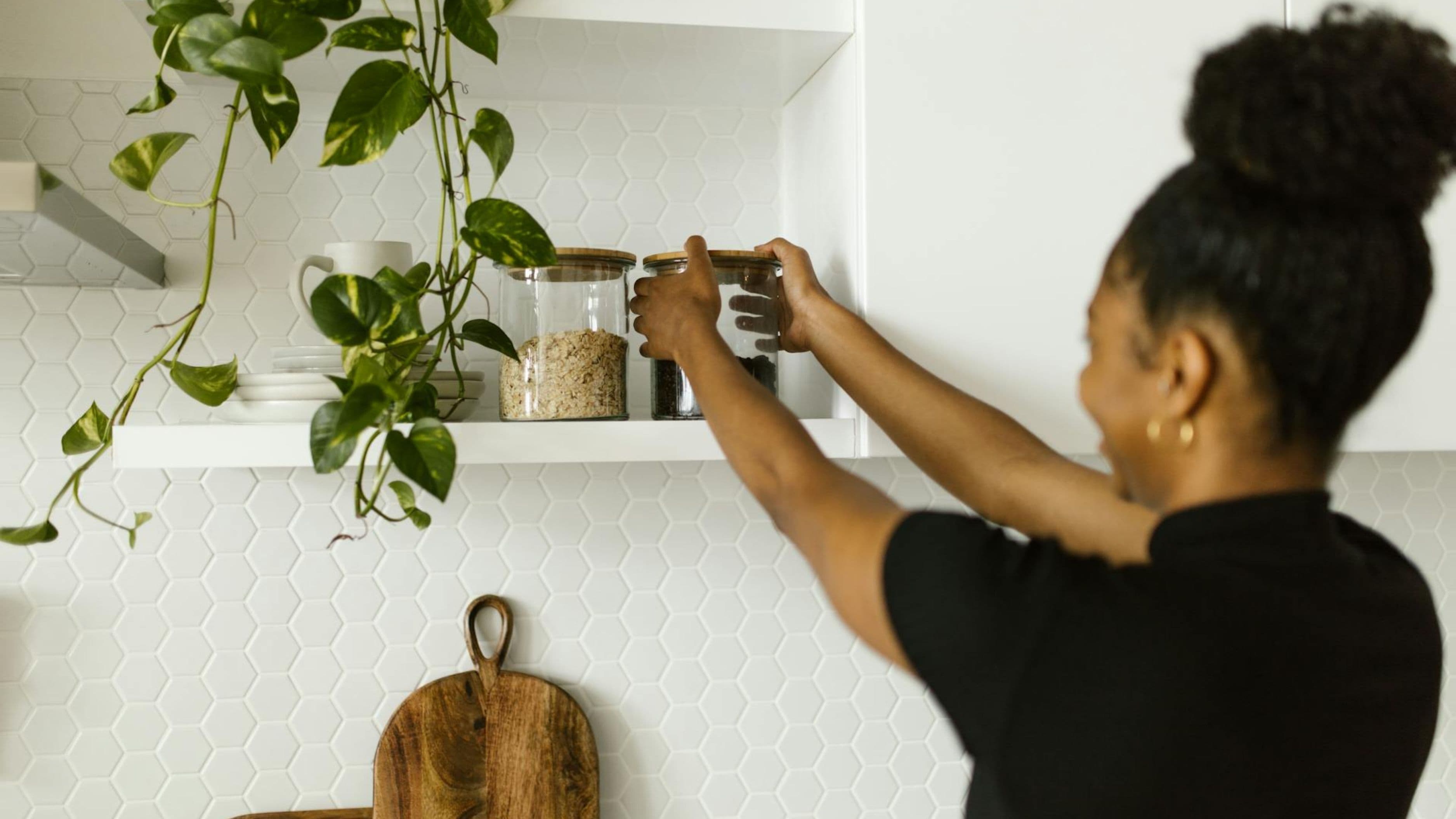
Listen closely to a popular kitchen organization video and you'll hear the gentle cascade of rice falling into a glass jar, the satisfying click of airtight lids sealing, the soft rustle of labels being peeled and placed. These aren't accidents — they're carefully captured audio elements that trigger autonomous sensory meridian response (ASMR) in many viewers. The visual rhythm of items being arranged in symmetrical patterns combines with these subtle sounds to create what researchers call "brain tingles." Your nervous system responds to predictable patterns and gentle repetitive motions by downregulating stress hormones. When you watch someone align matching containers on pristine shelves, your brain interprets it as environmental safety — everything in its place, nothing threatening, pure predictable calm washing over your overworked nervous system.
Digital Minimalism Meets Maximalist Consumption
Myth: Organization content promotes minimalism and reducing consumption.
Truth: It's actually fueling a multi-billion dollar aesthetic consumption economy.
Here's the paradox: we're watching videos about decluttering while simultaneously adding dozens of organizing products to our online shopping carts. The global home organization products market was valued at $15.5 billion in 2023 and continues growing, driven largely by social media influence. Creators showcase branded lazy Susans, acrylic dividers, and label makers with the production value of luxury car commercials. The content sells a lifestyle fantasy where buying the right containers will transform not just your pantry, but your entire existence into something Instagram-worthy. We're not actually simplifying — we're replacing visible clutter with aesthetically pleasing purchased order. The satisfaction comes from the transformation narrative itself, where consumption becomes the path to enlightenment rather than its obstacle.
Performative Productivity
Myth: These videos inspire real-world action and productivity.
Truth: They've become a form of productivity procrastination itself.
The irony is thick: you're watching someone else organize their kitchen while your own dishes pile up in the sink. This phenomenon, which psychologists call "productivity porn," allows us to feel accomplished without actually accomplishing anything. Viewing organized spaces triggers the same reward centers as completing tasks ourselves, giving us a hit of satisfaction without the effort. It's why you can watch three hours of cleaning content and never actually clean. The videos serve as a pressure release valve — we know we should be more organized, and watching others do it provides temporary relief from that guilt without requiring behavioral change. Your brain experiences vicarious achievement, the anxiety temporarily subsides, and you've effectively numbed yourself to your own cluttered reality.
The Aesthetic of Abundance
Myth: Organization content is about efficiency and saving space.
Truth: It's really about displaying wealth and abundance through curated plenty.
Notice what's being organized in viral videos: industrial quantities of snacks, backup supplies of backup supplies, refrigerators stocked like boutique grocery stores. This isn't organization born from necessity — it's abundance made visible through arrangement. The fully stocked, meticulously organized pantry signals economic security in uncertain times. When a creator shows thirty varieties of snacks perfectly arranged in matching containers, they're not just showing organization skills; they're performing class status. The satisfaction viewers experience comes partly from witnessing resource security, even if that security exists only in someone else's home. We're watching the modern equivalent of still-life paintings that displayed imported fruits and exotic foods — proof of access, plenty, and the luxury of caring about how your canned goods look.
Algorithmic Perfectionism
Myth: These videos succeed because they're helpful and informative.
Truth: They're engineered to exploit platform algorithms and human psychological vulnerabilities.
Every element is calculated: the before/after structure that keeps you watching, the time-lapse speed that maintains momentum, the final pan across the finished space that delivers the payoff. Creators have mastered the formula for maximum engagement — start with chaos that creates mild anxiety, build tension through the transformation process, and resolve with the serotonin hit of completion. Platforms reward watch time and completion rates, so videos are edited to the second for optimal retention. The hooks are sophisticated: "Wait until you see the after," "You won't believe what I did next," "The final result shocked me." You're not just watching organization — you're experiencing content weaponized for your attention, designed to trigger just enough discomfort that the resolution feels like relief.
Parasocial Domestic Bliss
Myth: We watch because we admire the organizers' skills.
Truth: We're forming one-sided relationships with people whose lives appear more together than ours.
The most successful organization content creators don't just show kitchens — they show lifestyle. They're consistently calm, perpetually put-together, living in homes where natural light streams through spotless windows onto marble countertops. Following them creates a parasocial relationship where their organizational success becomes intertwined with our perception of their overall life competence. We return not for the organizing tips (which are usually the same) but for the feeling of checking in with someone who has it all figured out. Their aesthetic domestic environment becomes a fantasy we can visit, a version of adulthood that feels aspirational yet somehow accessible. The satisfaction comes from briefly inhabiting their seemingly frictionless world, even though we're actually just watching advertisements for a lifestyle that doesn't exist.
Nostalgia for Order
Myth: This is a new trend created by social media algorithms.
Truth: We're experiencing digital-age nostalgia for pre-digital organizational systems.
There's something deeply comforting about physical categorization in an age where everything is cloud-based and abstract. Watching someone create a spice drawer organizer echoes card catalogs, filing systems, and the tangible organizational methods that once governed information. Before everything became searchable, we had to impose order on physical objects, and that process required thought, care, and visible systems. These videos tap into a collective longing for the concrete — for problems you can touch and solutions you can see. The labeled jars and color-coded categories represent a world where organization meant something you could hold in your hands, not another password-protected app. Your brain finds comfort in these analog systems because they make sense in a way that "the cloud" never will.
The Shame-Comfort Cycle
Myth: Organization content motivates positive change.
Truth: It often reinforces a cycle of inadequacy and temporary relief.
Here's how it works: you watch perfectly organized content, feel shame about your own space, get a burst of motivation, maybe buy some containers, lose momentum, feel worse, and return to the content for comfort. The videos become both the disease and the cure — they create the standard by which you feel inadequate while simultaneously providing the emotional balm when you inevitably fall short. Content creators rarely show the maintenance required to keep spaces Instagram-ready, the privilege of having time and money for these projects, or their own organizational failures. You're comparing your everyday chaos to someone's highly produced highlight reel, creating a cycle where the content that makes you feel bad is the same content you seek out to feel better.
Permission to Care About Small Things
Myth: Society values people who focus on "important" matters, not pantry aesthetics.
Truth: These videos give us permission to find meaning in domestic details our culture often dismisses.
There's a reason this content is consumed predominantly by women and viewed with mockery by critics who call it trivial. Domestic labor has historically been devalued, yet it's where many people spend significant time and emotional energy. Organization content validates caring about your environment, finding joy in household aesthetics, and taking pride in domestic competence. When you watch someone transform a chaotic drawer into a functional system, you're witnessing someone declare that this work matters, that beauty in daily spaces has value, and that the small acts of creating order are worth documenting and celebrating. The satisfaction comes from seeing typically invisible labor made visible, watching typically undervalued skills elevated to art, and receiving cultural permission to care about the space where you actually live your life.
Let go of the belief that you're watching organization content for practical reasons, and start recognizing it for what it really is: a complex emotional experience that speaks to deeper needs for control, beauty, and meaning in uncertain times. These videos aren't just about kitchens — they're about how we cope, what we value, and what brings us comfort when the world feels overwhelming. The next time you find yourself watching someone decant cereal into matching containers at 2 AM, don't judge yourself for the "pointless" activity. Instead, recognize you're participating in a cultural phenomenon that reveals something profound about how we find peace in the digital age, one perfectly labeled jar at a time.
📚 Sources
1. Grand View Research. "Home Organization Products Market Size, Share & Trends Analysis Report By Product, By Distribution Channel, By Region, And Segment Forecasts, 2024-2030." Market Research Report, 2023.
2. Poerio, G. L., Blakey, E., Hostler, T. J., & Veltri, T. "More than a feeling: Autonomous sensory meridian response (ASMR) is characterized by reliable changes in affect and physiology." PLOS ONE, 2018.